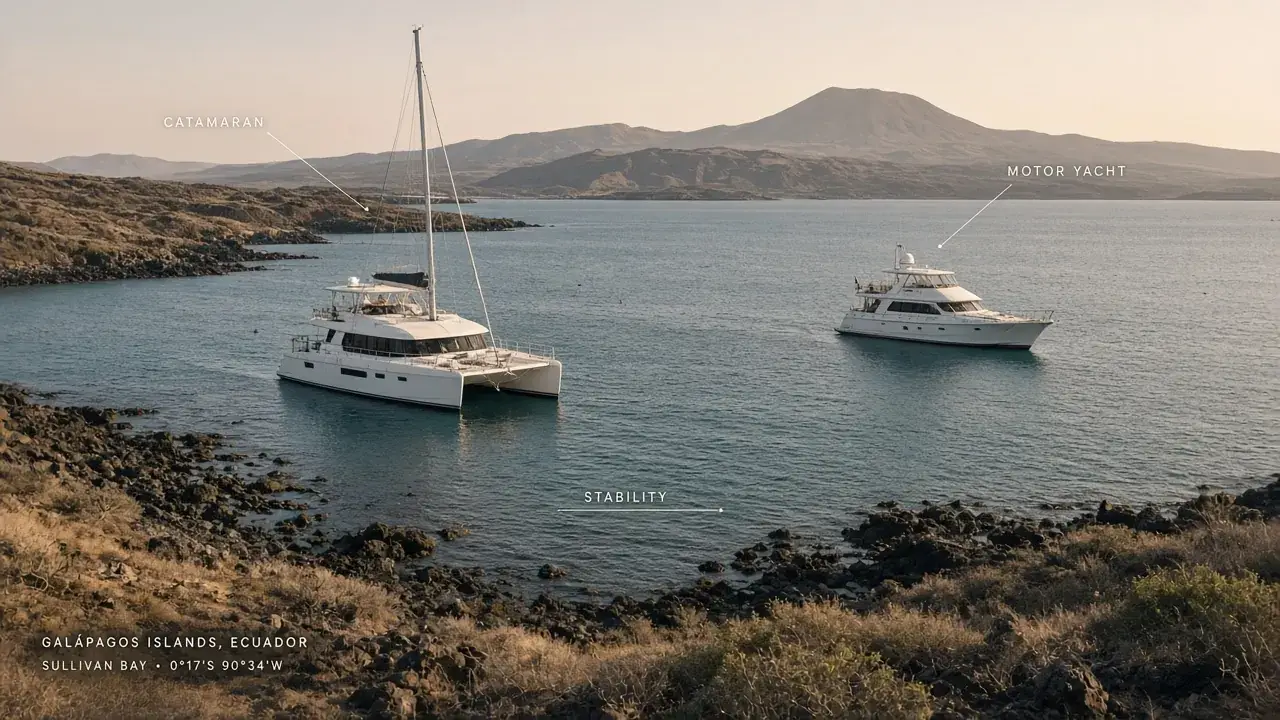
Choosing catamaran vs motor yacht Galapagos is a comfort-and-layout decision inside the same park itinerary framework—not a vote on which hull “sees more wildlife.” Compare beam and stability feel, deck space, cabin placement, and motion preferences, then verify guest capacity and day-by-day visitor sites before you request a quote. For the bigger picture on ships, itineraries and prices, see our Galapagos cruises guide.
catamaran vs motor yacht Galapagos: what is the quick answer?
Quick answer: pick the catamaran side of catamaran vs motor yacht Galapagos when you want wide beam, expansive deck lounges, and a stability feel many travelers describe as platform-like; pick the motor yacht side when you prefer classic single-hull profiles, different cabin stacking, or a specific vessel’s itinerary letter and crew rhythm. Neither hull type rewrites park rules, and catamaran vs motor yacht Galapagos never guarantees seasickness outcomes.
That is the practical core of catamaran vs motor yacht Galapagos for US travelers. Both formats sail as crewed, park-permitted expeditions with licensed naturalists. A thoughtful catamaran vs motor yacht Galapagos shortlist therefore starts with how you want to live aboard between landings—then checks whether the permitted week and cabin map match your party.
Use this rule of thumb
- Prefer catamaran emphasis in catamaran vs motor yacht Galapagos when deck space and beam matter most.
- Prefer motor yacht emphasis when a specific cabin layout or vessel class fits better.
- Never treat catamaran vs motor yacht Galapagos as a wildlife-access contest.
- Re-check the day-by-day visitor sites after you settle a catamaran vs motor yacht Galapagos comfort preference.
Explore inventory on the Galápagos cruise ships page and compare open departures in the Finder. Neutral geography primers such as Wikipedia’s Galápagos Islands page help with context, not bookings.
Which factors change the decision most?
The decision usually turns on four traveler-facing factors: motion comfort preferences, outdoor living space, cabin geometry, and which permitted itinerary week is actually available on the hull you like. Those factors matter more than brand adjectives when two ships look similar on paper.
Motion and stability feel (without guarantees)
Twin-hull designs are often described as feeling more stable in certain conditions; monohull motor yachts feel different underway. Individual sensitivity varies widely. Frame the choice as preference language—“I want a wider platform feel” versus “I like classic yacht motion”—not as a medical promise. Prior history on ferries or small craft is useful context to share with a planner, still without guaranteeing outcomes.
Social energy and deck life
Catamarans frequently emphasize broad aft decks and social outdoor zones. Motor yachts may stack lounges differently across decks. Ask how public spaces are used between landings so introverts and extroverts in the same cabin group are not surprised. Drying gear, coffee corners, and evening briefing circles are practical details that shape satisfaction more than brochure words.
Who is aboard with you?
Shared departures mix guests; private buyouts change exclusivity but not hull physics. If you are weighing charter later, keep the same comfort criteria and add capacity math. Families should map interconnecting cabins early; couples may prioritize suite privacy and quieter corners.
How do ship size, cabins and itinerary affect the experience?
Ship size, cabin map, and itinerary letter turn the hull debate into an operable booking brief. A beautiful deck photo means little if the permitted week or airport pattern does not match your flights.
Guest capacity and shore-group feel
Smaller vessels keep briefings intimate; larger ones may split pangas. Ask published guest capacity and typical shore-group size. Those answers often matter more than hull adjectives. If photography or slower walking pace matters to your party, ask how groups are organized on busy visitor sites.
Cabins: count beds, not only rooms
Confirm doubles versus twins, upper/lower berths, and whether interconnecting rooms exist. Catamaran cabins sometimes sit differently relative to waterline and deck access than motor yacht suites. Request a deck plan early. Singles should ask how empty berths are handled on shared sailings versus buyouts.
Itinerary letters are shared rules
Both hull types operate on park-permitted visitor sites. Choosing one hull does not unlock a private island schedule. Compare the day-by-day sites for the departure you can actually buy, not a generic “western vs eastern” slogan. Embarkation via Baltra or San Cristóbal follows the vessel’s pattern—write that into the brief beside your hull preference.

Practical onboard differences travelers notice first
Travelers comparing catamaran vs motor yacht Galapagos options often notice three onboard differences within the first day: how easy it is to move between outdoor lounges, how cabins relate to the waterline, and how gear dries after snorkels. None of those differences rewrite visitor-site schedules, but they shape whether the week feels spacious or compact between landings.
Ask the planner to narrate a sample afternoon aboard each shortlisted hull: return from a panga, rinse gear, grab a snack, and join a briefing. That walkthrough turns the hull debate from abstract beam talk into a lived itinerary. If your party includes mixed mobility needs, confirm handrails, step counts, and cabin doorway widths from the deck plan rather than from marketing adjectives.
Couples sometimes overweight suite photography; families sometimes overweight “biggest deck.” A balanced hull-type shortlist keeps both cabin privacy and public-space flow on the same page. When inventory allows, hold two dates on different hull types for the same travel month so the comparison stays apples-to-apples on season and airport pattern.
How to read a deck plan without getting lost
Start with guest capacity and cabin count, then mark which cabins are twins versus doubles, then mark public lounge locations relative to the aft platform. Only after that should you debate which side of catamaran vs motor yacht Galapagos “feels right.” If a motor yacht’s best suite sits beside a noisy generator zone—or a catamaran cabin sits far from the main lounge—those details belong in the brief before deposits.
Also confirm how many guests typically share a panga and whether longer walks are optional on certain days. Those operational notes matter for both hull types and keep hull shopping honest about energy levels, not only about stability feel language.
What are the trade-offs in comfort, wildlife access and value?
Honest trade-offs stay in comfort, space, and booking value—not invented animal odds. Keep catamaran vs motor yacht Galapagos conversations focused on how you live aboard between landings.
Comfort and living aboard
Catamarans often win on beam and outdoor square footage; motor yachts may win on a particular suite layout or quieter corner of the vessel. Walk the deck plan mentally: morning coffee space, post-snorkel drying zones, and evening briefing circles. That is the real comfort test inside hull-type shopping.
Wildlife access reality
Habitat access depends on permitted visitor sites, season, and conditions. Hull type does not grant exclusive animals. Do not let marketing turn catamaran vs motor yacht Galapagos into a wildlife guarantee contest. Seasonal water temperature themes can change snorkel comfort, but they do not rewrite park clocks.
Value without invented sticker prices
Compare itemized quotes for the same week and similar guest capacity. Align inclusions versus park fee, Transit Control Card, islands flights, tips, and drinks. A cheaper headline on one side of catamaran vs motor yacht Galapagos can disappear once line items match. For broader ship browsing, stay on galapagosislands.cruises cruise ships.
What should you verify before booking or requesting a quote?
Before anyone requests numbers, freeze operational facts so emails stay short and catamaran vs motor yacht Galapagos debates remain productive.
Pre-quote checklist
- Travel window (flexible days help inventory)
- Headcount, ages, and cabin pairing map
- Preference notes: beam/deck emphasis versus classic motor yacht layout
- Embarkation airport willingness (Baltra vs San Cristóbal) following the vessel’s pattern
- Mobility or seasickness preferences (not guarantees)
- Must-have habitat regions versus nice-to-haves inside permitted letters
- Full buyout versus shared cabin path
Questions to ask the planner
Ask: What is guest capacity and how do our cabins map? Ask: Which day-by-day visitor sites appear on this departure? Ask: How are public decks used between landings on this hull? Ask: What is included versus park fee, Transit Control Card, flights, tips, and drinks? Ask: What is the deposit and cancellation timeline in writing?
Charter path versus cabin path
If exclusivity and near-full capacity matter, review the yacht charter hub after you settle comfort preferences. If you need flexibility, stay in the Finder for cabin inventory. Either path still needs the same catamaran vs motor yacht Galapagos checklist for living aboard.
US travelers should also decide early whether snorkel intensity or dry-landing ease matters more than suite square footage. That priority filter removes unsuitable vessels before catamaran vs motor yacht Galapagos emotions take over. When two ships remain, request the same week’s inclusions list and the same airport pattern so the final choice is operational, not aesthetic.
Frequently asked questions for “catamaran vs motor yacht Galapagos”
Which is better for seasickness?
Neither is a guarantee. Many travelers describe catamarans as feeling more platform-stable; others prefer a specific motor yacht’s motion. Treat catamaran vs motor yacht Galapagos as preference plus personal history—not a medical claim.
Do catamarans and motor yachts visit different sites?
They follow park-permitted itineraries assigned to each departure. Hull type alone does not create a custom route. Compare the actual letter and day plan when you decide catamaran vs motor yacht Galapagos.
Is a catamaran always more spacious?
Often wider decks are a catamaran strength, but cabin volume and suite layout vary by vessel. Read the deck plan; do not assume every catamaran vs motor yacht Galapagos comparison favors one side on every metric.
Should couples and families choose differently?
Families may prioritize interconnecting cabins and deck play space; couples may prioritize suite privacy. Run those needs through the same catamaran vs motor yacht Galapagos checklist.
How many ships should we shortlist?
Shortlist at least two vessels on each side of catamaran vs motor yacht Galapagos when inventory allows, then eliminate using airport pattern, cabin map, and inclusions—not hull stereotypes alone.
Ready to settle catamaran vs motor yacht Galapagos with real inventory? Browse cruise ships, shortlist dates in the Finder, and write hola@galapagosislands.cruises when you want itemized options for the same week.
Keep planning: related Galapagos guides
 Cruise Planning · 5 min read12 Questions to Ask Before Booking Any Galapagos Cruise
 Cruise Planning · 8 min readUpper Deck vs Lower Deck Cabins on a Galapagos Cruise
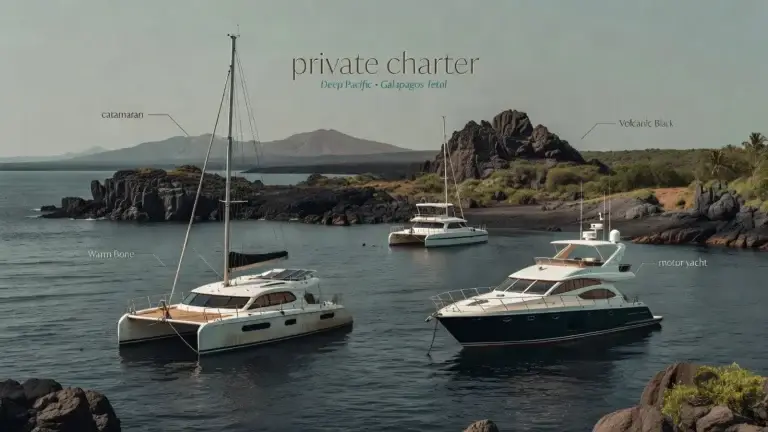 Private Charters · 8 min readCatamaran vs Motor Yacht for a Private Galapagos Charter
 Cruise Planning · 6 min readHow to Choose the Best Galapagos Cruise for Your Trip
Start from the main guides: Galapagos cruises Galapagos charters Galapagos cruise ships
