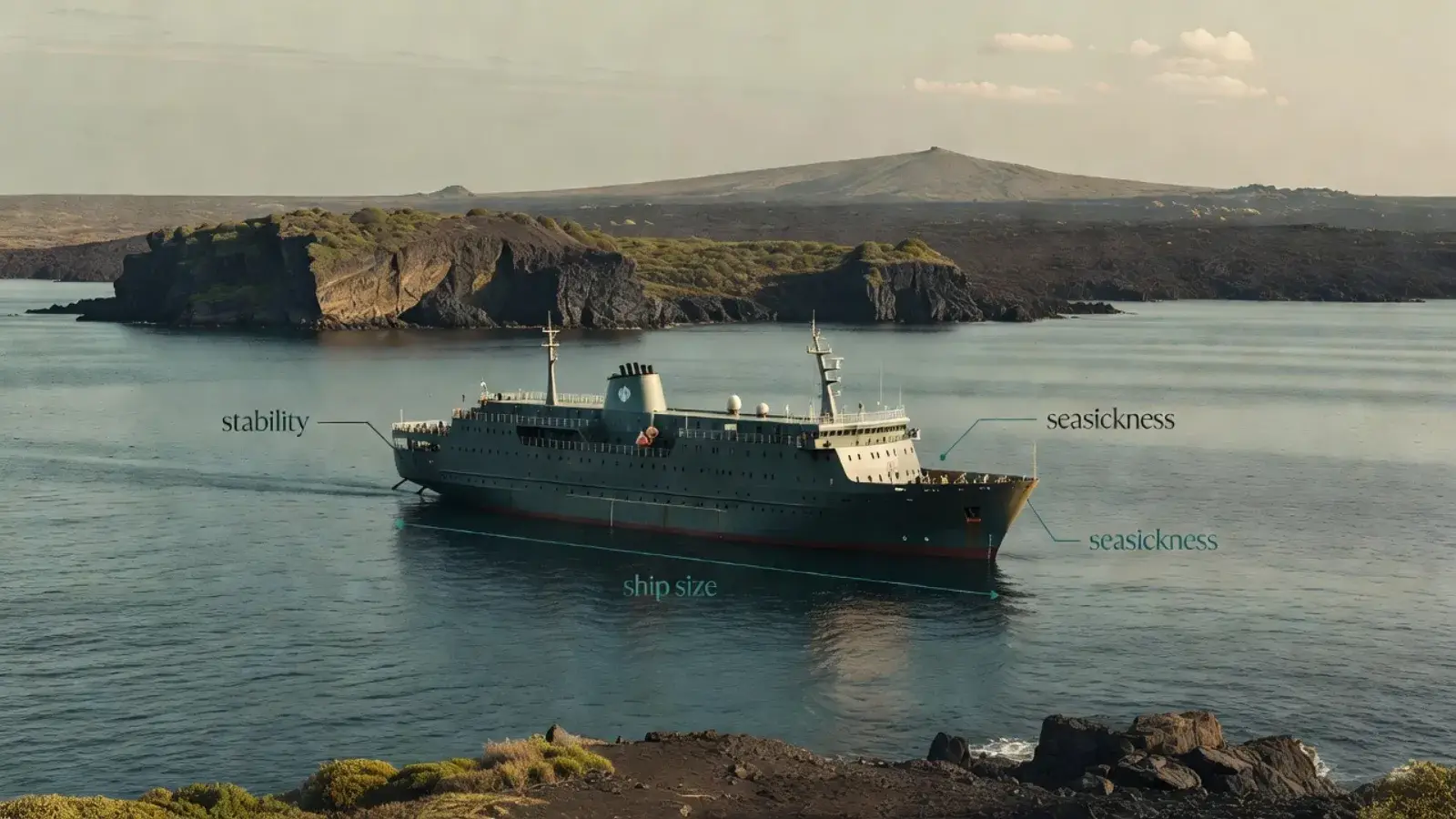
Choosing the best Galapagos cruise for seasickness is about ship size, cabin placement, route habits, and honest motion expectations—not a miracle-cure brochure. You compare stability cues, itinerary exposure, and personal sensitivity, then match a vessel that reduces risk without inventing calm seas. Read comfort before you treat any yacht as automatic.
best Galapagos cruise for seasickness: what is the quick answer?
Quick answer: the best Galapagos cruise for seasickness shortlist usually favors larger or more stable hulls, midship lower cabins, and itineraries that match your group’s motion tolerance—plus proactive prevention habits—not a promise of zero swell. Confirm cabin map, vessel type, and embarkation pattern before you deposit. Skip products that invent wildlife guarantees or claim unlimited calm water.
That is the practical core of planning the best Galapagos cruise for seasickness. Every Galapagos sailing still crosses open Pacific water under park rules. Keep the decision comfort-first and rules-honest.
Travelers researching the best Galapagos cruise for seasickness often start with who gets queasy, then filter ship size and cabin maps. That sequence keeps the best Galapagos cruise for seasickness search adult when brochure adjectives try to rush the brief.
Use this rule of thumb
- Rank personal motion history before you fall in love with a yacht photo.
- Score cabin placement and ship size together—not separately.
- Separate celebration goals from what sea state and park rules allow.
- Treat seasickness mitigation as layered habits plus vessel choice—not one magic category.
Start with the cruise finder, browse Galapagos cruises, then compare itineraries that fit your comfort band.
Which factors change the decision most?
Motion comfort is multi-factor. No single checkbox ends the search.
Personal sensitivity history
Guests who struggle on ferries or small boats need stricter vessel filters than guests who sleep through turbulence. Honest self-scoring leads any search for the best Galapagos cruise for seasickness.
Ship size and hull behavior
Larger expedition ships and many catamarans often feel calmer for more guests in certain conditions. Smaller yachts can still be excellent expeditions—they may simply demand better cabin placement and preparation.
Cabin location
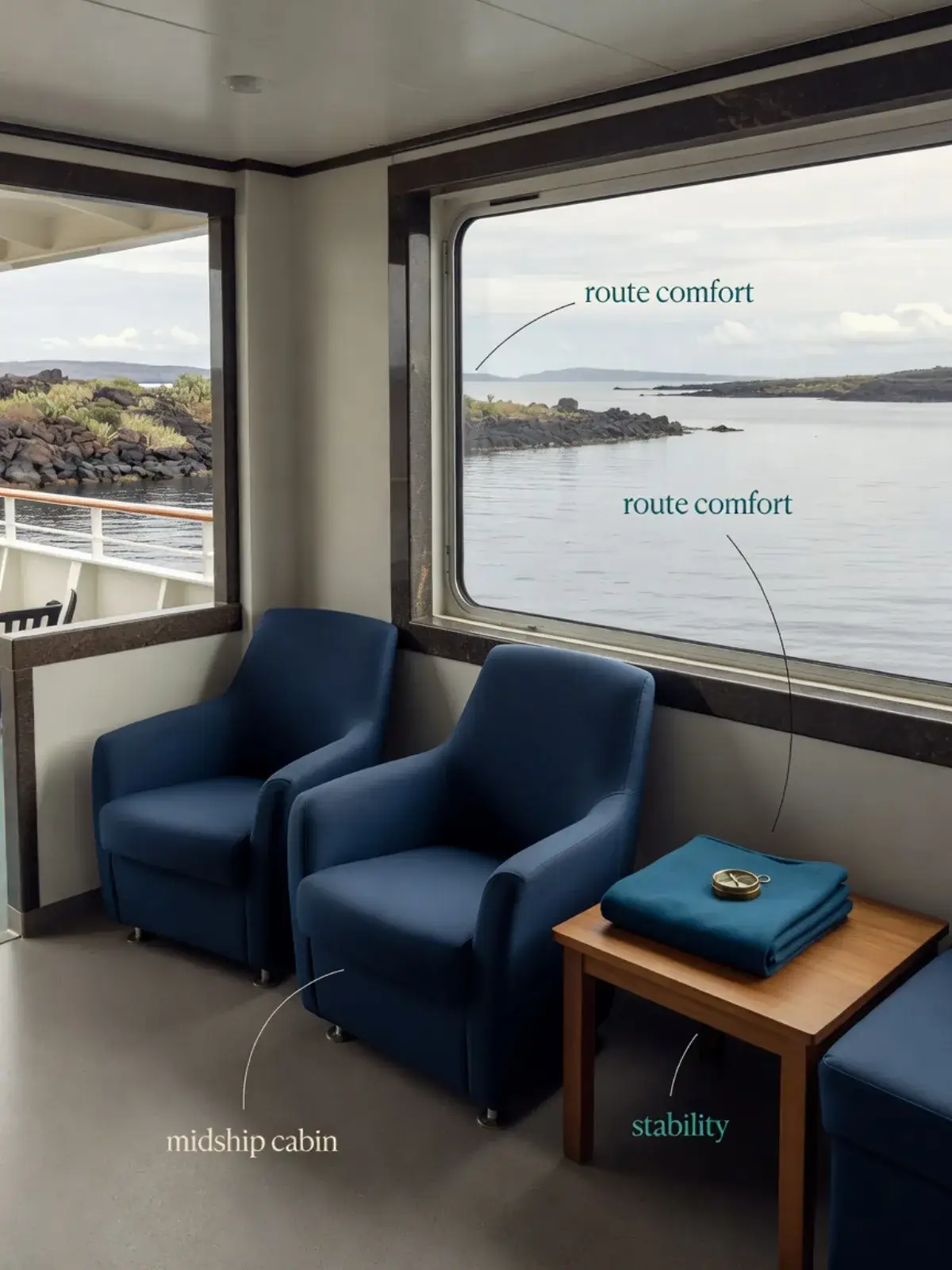
Midship and lower cabins typically move less than high forward cabins. Ask for a map, not a suite slogan, when seasickness is a real concern.
Itinerary and crossing patterns
Some letters include longer open-water legs. Ask what your shortlisted vessels typically experience without inventing exact swell forecasts.
Prevention habits
Medication (as advised by your clinician), hydration, light meals, horizon focus, and rest matter. Vessel choice amplifies habits; it does not replace them in a mature plan for the best Galapagos cruise for seasickness.
Group composition
One sensitive traveler in a mixed family changes cabin priority for everyone. Write that into the brief early.
How do ship size, cabins and itinerary affect the experience?
Hardware and route shape daily comfort.
Match guest band to motion priorities
Larger ships often add mass and social spaces; smaller yachts add intimacy. Neither is automatically best until you map ages and sensitivity. Count real beds for any serious best Galapagos cruise for seasickness worksheet.
Cabin map as comfort infrastructure
Assign sensitive guests first—midship, lower when possible—then place the rest. Connecting doors help families but should not override motion placement.
Catamaran versus monohull cues
Many guests report twin-hull platforms feel more stable in certain conditions. Motion still varies by sea state and design—ask vessel-specific questions rather than trusting a category myth.
Guide pacing and shore days
Active landings still happen. Seasickness on passages can coexist with excellent shore days. Ask how the crew supports guests who need quieter mornings.
Social spaces and fresh air
Outdoor decks and horizon views help some guests more than sealed lounges. Confirm indoor/outdoor options for mixed weather when scoring the best Galapagos cruise for seasickness.
Activity realism under motion limits
Snorkeling and dinghy rides still depend on conditions. Private pacing on a charter can soften schedules; it does not invent glass-calm oceans. Keep activity hopes adult.
Crew support expectations
Ask what is standard for motion-sensitive guests—quiet cabin options, meal flexibility, and guidance on prevention. Service language should be vessel-specific in the quote.
What are the trade-offs in comfort, wildlife access and value?
Comfort choices trade against other goals.
Stability versus intimacy
Larger ships may feel calmer for more guests while feeling less private. Smaller yachts may feel more exclusive while asking more of sensitive travelers. Score that trade explicitly when seeking the best Galapagos cruise for seasickness.
Cabin priority versus suite prestige
A midship standard cabin can beat a premium forward suite for motion. Prestige labels are not comfort labels.
Route coverage versus crossing exposure
Some must-see habitats sit behind longer passages. Decide which sites are non-negotiable versus nice-to-have before you force a high-exposure letter.
Charter privacy versus cabin economics
A full buyout can control cabin assignment and pacing. It does not rewrite sea state. Compare privacy gains without inventing prices—ask for inclusion columns.
What stays fixed under park rules
Visitor sites, guide requirements, and many schedule boundaries are not private playgrounds. No vessel invents exclusive colony access outside rules.
No invented wildlife guarantees
Stability does not sell animal appearances. Habitats and seasons shape opportunity; comfort upgrades do not rewrite biology on any search for the best Galapagos cruise for seasickness.
What should you verify before booking or requesting a quote?
Clean briefs get cleaner recommendations.
Checklist before you request a quote
- Who is motion-sensitive and how severe is their history
- Preferred ship size band: larger expedition, mid-size, small yacht, or open
- Cabin placement priorities (midship/lower first)
- Preferred month window and alternate weeks
- Must-see habitats versus nice-to-haves
- Embarkation airport flexibility for US connections
- Inclusion questions: park fee, Transit Control Card, flights, tips, beverages
- Clinician-approved prevention plan (do not invent medical advice here)
Questions to ask the planner
Ask: Which vessels in our dates have midship cabins still available? Ask: How do catamaran and monohull options compare for our sensitivity level? Ask: Which itinerary letters typically include longer open-water legs? Ask: What should we verify before calling this the best Galapagos cruise for seasickness for our group?
Comparing buyout versus cabin holds
Sometimes holding specific cabins on a shared sailing is enough. Compare privacy and placement control against buyout structure without inventing prices.
Booking path
Shortlist with the cruise finder, review yacht charter only if headcount and placement control warrant it, and email hola@galapagosislands.cruises with sensitivity notes, dates, and cabin priorities. Ready to turn the best Galapagos cruise for seasickness into a vessel shortlist? Send a one-page brief so recommendations stay comparable.
How US travelers usually shortlist
Most travelers evaluating the best Galapagos cruise for seasickness begin with who gets queasy, then ask which ships still offer midship inventory. That sequence prevents emotional yacht photos from overriding comfort logistics.
When two vessels both claim stability, demand cabin numbers. A written map turns comfort talk into a bookable fact. If the planner cannot produce placement guidance, keep shopping.
Also score embarkation energy: long US arrivals plus first-night motion can stack poorly. Build arrival buffers so your plan survives airline reality.
Seasonality without invented prices
Peak months tighten preferred cabin inventory faster than shoulder weeks. That is demand literacy for the best Galapagos cruise for seasickness, not a scare headline. Ask what remains for your exact month instead of trusting generic availability myths.
When dates are rigid, widen the vessel list before you abandon the trip. Flexibility across ship sizes often unlocks midship cabins that a single favorite yacht cannot provide.
Document inclusions in one table so value comparisons stay adult. Park fee, Transit Control Card, flights, and tips change the real package around any hold.
Prevention literacy without medical claims
Discuss prevention with a clinician who knows your history. Blogs should not prescribe drugs. Layer habits with vessel choice when hunting the best Galapagos cruise for seasickness.
If photographers need early quiet and sensitive guests need later starts, write that into the brief. Soft logistics protect hard inventory work when comfort is non-negotiable.
Comparing two shortlists without invented rates
Ask for the same inclusion columns on each vessel: park fee, Transit Control Card, flights, tips, beverages, and wet-suits if relevant. A clean table keeps best Galapagos cruise for seasickness value talk adult. Refuse quotes that bury cabin location differences.
When one vessel looks cheaper, check whether sensitive guests are forced into high forward cabins. Paying less for a worse motion cabin changes the math without anyone saying a headline price in a blog post.
Frequently asked questions for “best Galapagos cruise for seasickness”
Is a catamaran always better if I get seasick?
Not always in every sea state. Twin-hull designs often feel calmer for many guests, but cabin placement and conditions still matter. Ask vessel-specific questions inside any best Galapagos cruise for seasickness compare.
Which cabin should I request?
Midship and lower cabins are common first requests for motion-sensitive guests. Confirm the published map before you deposit.
Can a private charter guarantee calm seas?
No. Charters improve cabin control and pacing; they do not rewrite Pacific conditions or park rules.
Do stable ships guarantee wildlife sightings?
No. Habitats and seasons shape opportunity. Keep biology honest when comparing vessels.
How should US travelers decide quickly?
Freeze sensitivity notes, dates, ship-size preferences, and cabin placement rules, then compare two vessels with maps side by side. Email hola@galapagosislands.cruises with that brief so a best Galapagos cruise for seasickness shortlist stays focused.
Verify cabin numbers before group chats restart the debate. Re-read vessel notes once more before you finalize any deposit.
Share the same one-page brief with every decision-maker so conversations stay aligned.
If inventory shifts, update your shortlist table the same day—stale rows waste momentum on any best Galapagos cruise for seasickness search.
Prefer written confirmations over chat screenshots whenever details change.
A calm checklist beats last-minute optimism in every mature comfort-focused booking path.
Keep hola@galapagosislands.cruises copied when your constraints become final.
Second-pass reviews catch missing buffers that first excitement skips.
Ready to plan? Visit the cruise finder and write hola@galapagosislands.cruises when sensitivity notes, dates, and cabin priorities are clear.
Keep planning: related Galapagos guides
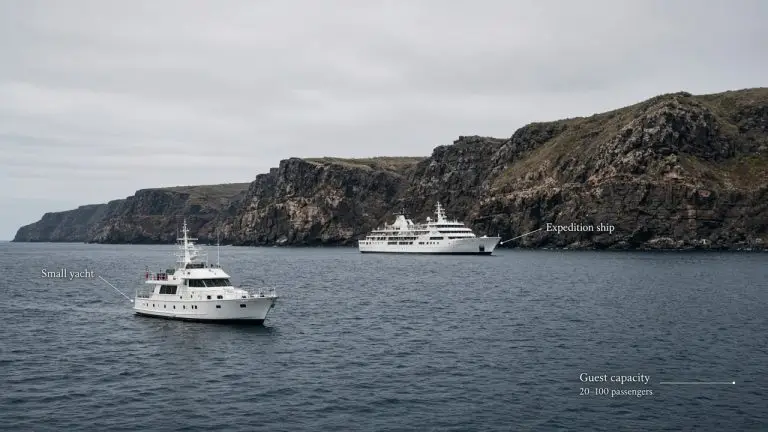 Cruise Planning · 10 min readSmall Yacht vs Expedition Ship in Galapagos: Which Experience Fits You?
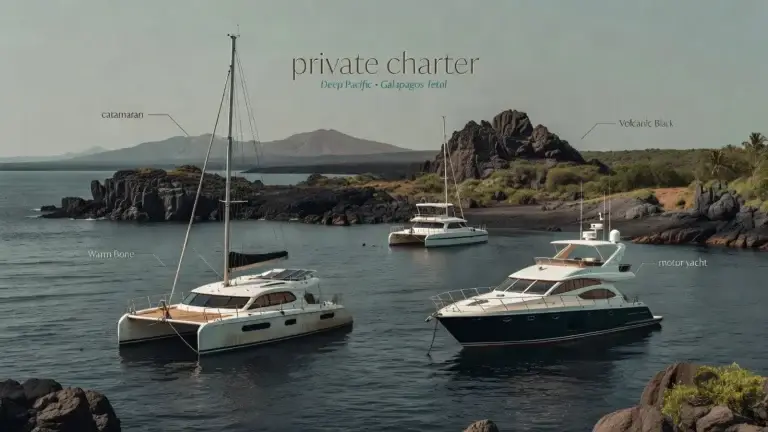 Private Charters · 8 min readCatamaran vs Motor Yacht for a Private Galapagos Charter
 Cruise Planning · 9 min readGalapagos Cruise vs Land-Based Trip: Which Gives You More?
 Cruise Planning · 7 min readIs a Private Balcony Worth It on a Galapagos Cruise?
Start from the main guides: Galapagos cruises Galapagos charters Galapagos cruise ships
